Smartwatch Water Resistance Ratings Explained ATM IP
Demystify smartwatch water resistance ratings like ATM and IP. Learn what they mean for swimming and water exposure.
Demystify smartwatch water resistance ratings like ATM and IP. Learn what they mean for swimming and water exposure.
Smartwatch Water Resistance Ratings Explained ATM IP
Hey there, tech enthusiasts and water lovers! So, you've got your eye on a shiny new smartwatch, maybe for tracking your laps in the pool, or perhaps you just want to make sure it survives an unexpected downpour. One of the most crucial specs you'll encounter when shopping for a smartwatch is its water resistance rating. But what do those mysterious 'ATM' and 'IP' numbers actually mean? And more importantly, can you really take your new gadget for a swim?
Let's dive deep into the world of smartwatch water resistance, breaking down the jargon and helping you understand what's truly safe for your wrist-worn companion. We'll cover everything from splash-proof to dive-ready, and even recommend some top smartwatches for various water-related activities.
Understanding ATM Ratings What Does 3ATM 5ATM 10ATM Mean for Your Smartwatch
When you see 'ATM' on a smartwatch's spec sheet, it stands for 'Atmospheres' or 'Atmospheric Pressure.' This rating indicates the amount of static pressure a device can withstand. It's a common rating for traditional watches and has carried over to smartwatches. However, and this is a big 'however,' these ratings are often misunderstood. They don't directly translate to depth in meters or feet for dynamic activities like swimming.
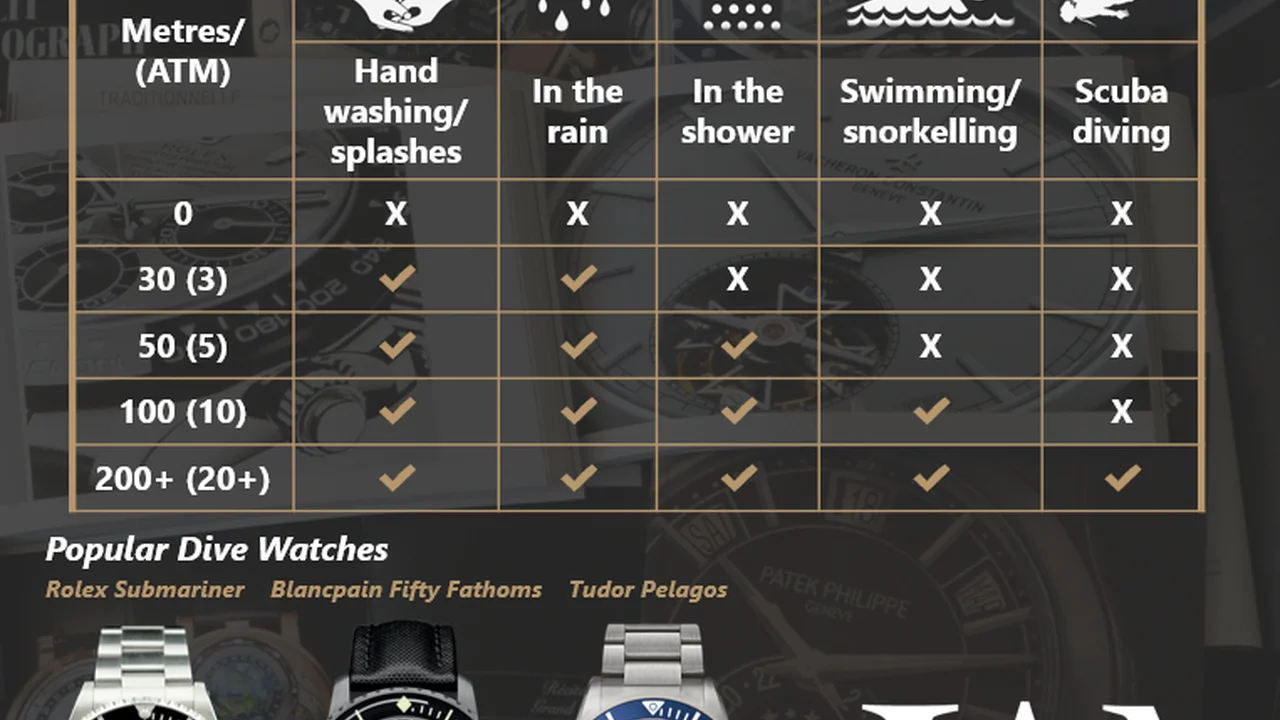
3 ATM (30 Meters / 100 Feet) Water Resistant
A smartwatch with a 3 ATM rating is generally considered 'splash-proof' or 'rain-proof.' This means it can handle:
- Accidental splashes from washing hands.
- Light rain.
- Sweat during workouts.
What it CANNOT handle: Showering, swimming, diving, or any prolonged water immersion. Think of it as protection against everyday moisture, not submersion. If you accidentally drop it in a puddle and quickly retrieve it, it might be okay, but don't push your luck.
5 ATM (50 Meters / 165 Feet) Water Resistant
This is where things start to get a bit more interesting for water activities. A 5 ATM rating typically means the smartwatch is suitable for:
- Showering (though not always recommended due to soap and shampoo).
- Shallow-water activities like swimming in a pool or ocean.
- Surface swimming.
What it CANNOT handle: High-speed water sports (like jet skiing), diving, or prolonged submersion at significant depths. While it's rated for 50 meters, this is under static lab conditions. The dynamic pressure from a swim stroke can exceed this. Most manufacturers will state 'suitable for swimming' if it's truly designed for it.
10 ATM (100 Meters / 330 Feet) Water Resistant
Smartwatches with a 10 ATM rating are generally considered robust enough for more serious water activities. You can typically use them for:
- Snorkeling.
- Swimming in pools and open water.
- Most water sports (excluding high-impact diving).
What it CANNOT handle: Scuba diving or deep-sea diving. While it offers significant protection, it's not designed for the extreme pressures of professional diving.
20 ATM (200 Meters / 660 Feet) Water Resistant and Beyond
These ratings are usually found on specialized dive watches or very rugged smartwatches. A 20 ATM rating means the device is suitable for:
- Recreational scuba diving.
- All surface water sports.
For anything beyond recreational scuba diving, you'd be looking at ISO 6425 certified dive watches, which have even more stringent testing requirements.
Decoding IP Ratings Ingress Protection for Smartwatches
While ATM ratings focus on pressure, IP ratings (Ingress Protection) tell you how well a device is protected against both solids (like dust) and liquids (like water). You'll see an 'IP' followed by two digits, for example, IP68.
- The first digit indicates protection against solid objects (dust, dirt, etc.), on a scale of 0 to 6. A '6' means it's dust-tight.
- The second digit indicates protection against liquids (water), on a scale of 0 to 9K.
Common IP Ratings for Smartwatches and What They Mean
IP67 Smartwatch Water Resistance
This is a very common rating for many smartphones and some smartwatches. It means:
- 6: Dust-tight. No ingress of dust.
- 7: Protected against immersion in water up to 1 meter (3.3 feet) for up to 30 minutes.
What it means for you: Your smartwatch can survive accidental drops into shallow water (like a sink or toilet) for a short period. It's good for splashes and rain, but generally not recommended for swimming or showering, as prolonged or dynamic immersion can exceed its limits.
IP68 Smartwatch Water Resistance
This is the most common high-level IP rating you'll see on premium smartwatches. It means:
- 6: Dust-tight.
- 8: Protected against continuous immersion in water under conditions specified by the manufacturer. This usually means deeper than 1 meter and for longer than 30 minutes, but the exact depth and time can vary by manufacturer. For example, Apple Watch Series 8 is rated IP6X and water resistant to 50 meters (5 ATM), which is a combination of both rating systems.
What it means for you: An IP68 rating often implies suitability for swimming in pools and shallow open water, but always check the manufacturer's specific guidelines. Some IP68 devices might be fine for a quick dip, while others are designed for regular swimming.
Important Considerations Beyond the Numbers Smartwatch Durability
The numbers are a great starting point, but there's more to smartwatch water resistance than just ATM and IP ratings. Here are some crucial factors to keep in mind:
Temperature and Chemicals Smartwatch Longevity
Water resistance ratings are typically tested in fresh, clean water at room temperature. Exposure to other liquids can compromise the seals over time:
- Saltwater: Can be corrosive. Always rinse your smartwatch with fresh water after swimming in the ocean.
- Chlorine: Found in pools, can degrade seals. Rinse after pool use.
- Soap, Shampoo, Lotions: These can break down the water-resistant seals. Avoid showering with your smartwatch, even if it's rated for it.
- Hot Water/Steam: Hot tubs, saunas, and hot showers can cause seals to expand and contract, potentially creating microscopic gaps that allow water in. Avoid these environments.
Aging and Wear and Tear Smartwatch Maintenance
Water resistance is not a permanent feature. Over time, seals can degrade due to:
- Impacts: Dropping your smartwatch can compromise its integrity.
- Temperature changes: Extreme hot and cold can affect seals.
- Chemical exposure: As mentioned above.
- General wear: Seals naturally degrade over years of use.
This means an older smartwatch, even if it had a high water resistance rating when new, might not be as resistant now.
Buttons and Touchscreens Under Water Smartwatch Functionality
Most smartwatches are not designed for button presses or touchscreen interaction while submerged. Water can register as touches, leading to unintended actions. Many smartwatches have a 'water lock' mode that disables the touchscreen to prevent this, and then uses vibrations to expel water from the speaker after your swim.
Top Smartwatches for Water Activities Product Recommendations
Now that we've demystified the ratings, let's look at some smartwatches that are genuinely good for water activities, from casual swimming to more intense sports. We'll focus on models that explicitly state suitability for swimming and offer robust water resistance.
1. Apple Watch Series 9 Best Smartwatch for iPhone Users Swimming
Water Resistance: Water resistant to 50 meters (5 ATM). IP6X dust resistant.
Use Case: Excellent for swimming in pools and open water. It has dedicated swim tracking features, including stroke detection, lap counting, and calorie burn. It also has a 'Water Lock' feature to prevent accidental touches and eject water from the speaker after your swim.
Comparison: While rated 5 ATM like many others, Apple's implementation and software integration for swimming are top-notch. It's not for scuba diving, but perfect for recreational swimming, snorkeling, and showering.
Price Range: Typically starts around $399 USD for the GPS model, varying by size and connectivity (GPS + Cellular costs more).
2. Samsung Galaxy Watch 6 Series Best Smartwatch for Android Users Swimming
Water Resistance: 5 ATM + IP68. MIL-STD-810H certified for durability.
Use Case: Great for swimming and general water exposure for Android users. It offers robust swim tracking through Samsung Health, including pool and open water modes. The IP68 rating combined with 5 ATM gives you confidence for most surface water activities.
Comparison: Directly competes with Apple Watch for general users, offering similar water resistance capabilities. The MIL-STD-810H certification adds an extra layer of ruggedness, making it suitable for more active lifestyles.
Price Range: Starts around $299 USD for the standard model, with the Classic version being slightly more expensive.
3. Garmin Forerunner 965 Best Smartwatch for Triathletes Water Sports
Water Resistance: 5 ATM.
Use Case: Garmin is a leader in fitness tracking, and the Forerunner series is built for athletes. The Forerunner 965 is excellent for swimming (pool and open water), triathlon, and other water sports. It offers advanced metrics for swimming, including SWOLF score, critical swim speed, and drill logging. It's designed to withstand the rigors of serious training.
Comparison: While also 5 ATM, Garmin's focus on sports means their devices are rigorously tested for dynamic water activities. They often feel more robust for dedicated athletes compared to general-purpose smartwatches.
Price Range: Around $599 USD, reflecting its premium features for serious athletes.
4. Fitbit Sense 2 Best Smartwatch for Health Tracking Swimming
Water Resistance: Water resistant to 50 meters (5 ATM).
Use Case: The Fitbit Sense 2 is primarily a health and fitness tracker, and its 5 ATM rating makes it suitable for swimming. It tracks laps, duration, and calories burned during your swim workouts. It's a good option if you want a balance of health monitoring and basic swim tracking.
Comparison: Less feature-rich than a dedicated sports watch like Garmin, but excellent for everyday health tracking and casual swimming. Its focus is more on holistic well-being.
Price Range: Around $299 USD.
5. Amazfit GTR 4 Best Budget Smartwatch for Swimming
Water Resistance: 5 ATM.
Use Case: If you're on a tighter budget but still want a smartwatch capable of swim tracking, the Amazfit GTR 4 is a solid choice. It offers 5 ATM water resistance and can track various swim metrics, including stroke count and SWOLF. It's a great value proposition for casual swimmers.
Comparison: Offers competitive water resistance and swim tracking features at a significantly lower price point than premium brands. While it might not have the same level of app ecosystem or advanced health features, it delivers on core swim tracking.
Price Range: Around $199 USD.
6. Garmin Fenix 7 Series Best Rugged Smartwatch for Extreme Water Sports
Water Resistance: 10 ATM.
Use Case: For the ultimate adventurers and those involved in more extreme water sports, the Garmin Fenix 7 series is built like a tank. Its 10 ATM rating means it can handle snorkeling, high-speed water sports, and even some light recreational diving (though not certified for scuba). It's packed with multi-sport features and incredible battery life.
Comparison: This is a step up in ruggedness and water resistance from the Forerunner series, designed for more demanding outdoor and water environments. It's a true multi-sport beast.
Price Range: Starts around $699 USD and can go much higher for Sapphire Solar editions.
Tips for Maintaining Your Smartwatch's Water Resistance Smartwatch Care
Even with a high water resistance rating, proper care can significantly extend the life and reliability of your smartwatch. Here are some golden rules:
Rinse After Exposure Smartwatch Cleaning
Always rinse your smartwatch with fresh, clean water after exposure to saltwater, chlorinated water, or any other chemicals. This helps prevent corrosion and degradation of seals.
Avoid Extreme Temperatures Smartwatch Protection
Keep your smartwatch away from hot tubs, saunas, steam rooms, and extremely hot showers. The rapid temperature changes and steam can compromise the water-resistant seals.
Don't Press Buttons Underwater Smartwatch Usage
Unless the manufacturer explicitly states otherwise (which is rare for smartwatches, more common for dedicated dive computers), avoid pressing buttons or interacting with the touchscreen while the device is submerged. This can create pathways for water ingress.
Check for Damage Smartwatch Inspection
Periodically inspect your smartwatch for any visible damage to the casing, screen, or buttons. Even a small crack can compromise its water resistance.
Dry Thoroughly Smartwatch Drying
After any water exposure, dry your smartwatch thoroughly with a soft, lint-free cloth. Pay attention to charging ports, speaker grilles, and button areas where water can linger.
Avoid Disassembly Smartwatch Repair
Never attempt to open or disassemble your smartwatch yourself. This will immediately void its water resistance and likely its warranty.
The Takeaway Smartwatch Water Resistance Summary
Understanding ATM and IP ratings is key to choosing the right smartwatch for your lifestyle. While a 3 ATM rating is fine for splashes, you'll want at least 5 ATM and ideally an IP68 rating if you plan on swimming. Remember that these ratings are for controlled lab conditions, and dynamic activities or exposure to chemicals can affect real-world performance.
Always check the manufacturer's specific recommendations for water usage, as they often provide more detailed guidance than just the numbers. And most importantly, treat your smartwatch with care, especially after water exposure, to ensure it stays functional and protected for years to come. Happy swimming, and enjoy your tech!
:max_bytes(150000):strip_icc()/277019-baked-pork-chops-with-cream-of-mushroom-soup-DDMFS-beauty-4x3-BG-7505-5762b731cf30447d9cbbbbbf387beafa.jpg)